
Bringing Nuclear Back into the Light
For decades, nuclear power lived behind public concern and cooling-tower silhouettes. Three Mile Island, Chernobyl and Fukushima transformed accidents into symbols, and an industry once expected to power the future retreated into the shadows.
Now America needs it back.
Electricity demand is climbing as data centers, manufacturing and electrification place new pressure on the grid. Coal remains dependable but environmentally costly. Natural gas is vulnerable to fuel-price and pipeline constraints. Wind and solar are increasingly economical, but variable output requires transmission, storage or backup power.
Nuclear plants produce enormous amounts of around-the-clock electricity with minimal operational carbon emissions and a comparatively small physical footprint. Existing reactors are receiving license extensions and uprates. Retired plants are being considered for restart, while small modular reactors and fusion projects promise a new generation of nuclear technology.
But ambition is colliding with scarcity.
Big Ambitions, Limited Resources
Decades without sustained nuclear construction weakened the experienced workforce and supplier base. Nuclear projects must now compete with data centers, semiconductor plants and other megaprojects for engineers, craft workers, cranes and specialized transport equipment.
A reactor can have a license, financing and customers for its power – and still fall behind because a critical component cannot reach the site or pass through the plant.
That is where companies such as Barnhart become essential. Barnhart does more than supply scarce people and equipment. Its engineers create lifting, transport and component-replacement methods designed to make projects require fewer labor-hours, fewer handling steps and less critical-path time. Custom lifting devices, compact gantries, remote-controlled crawlers and full-scale mockups have helped nuclear customers avoid structural modifications and save shifts or days during tightly scheduled work.
The equipment is the visible part. The real product is time removed from the critical path.
But these solutions must begin early. Advance coordination allows constraints to be discovered, tools to be engineered and tested, and scarce resources to be reserved.
Nuclear power has been called back into the light. Whether every project can answer that call may depend on how early owners prepare the physical path that will bring it there.
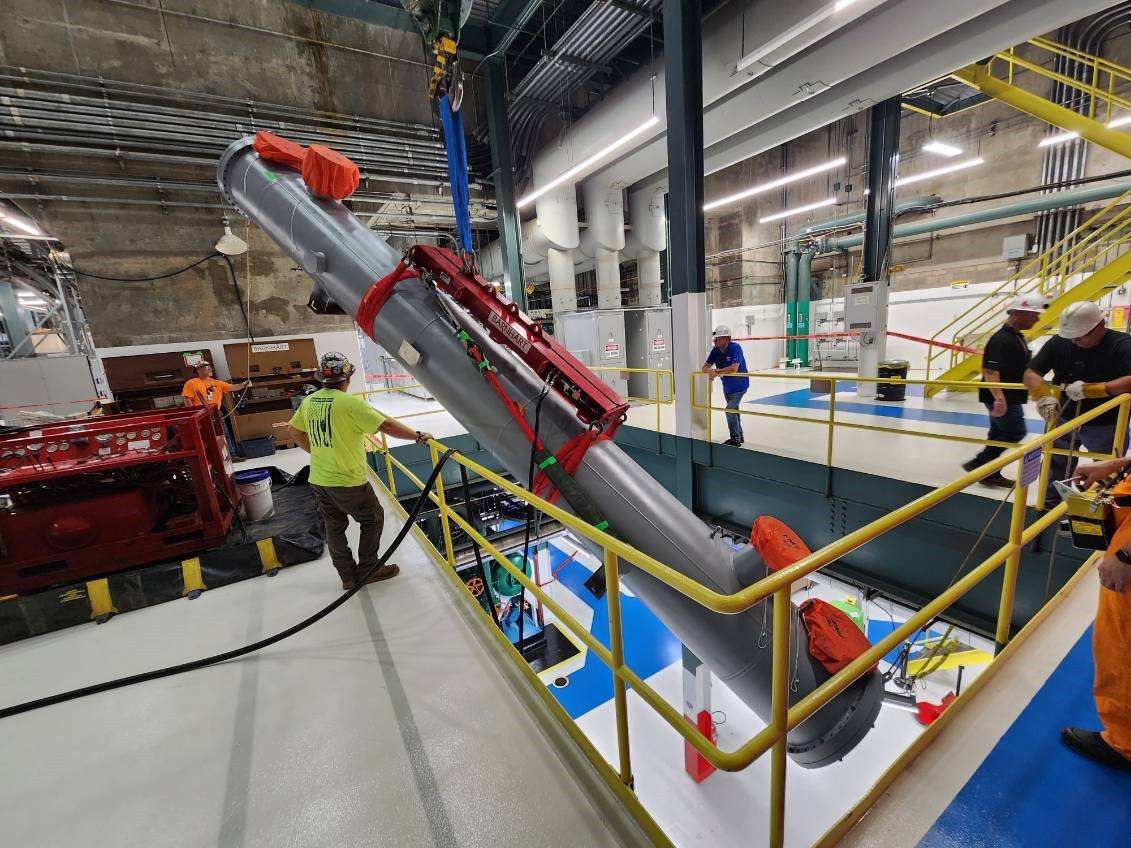
Barnhart’s 27k mini tip stick maneuvers a 19,000-pound heat exchanger at a nuclear plant in New York.